Marsh, Fen or Swamp: What Sets Them Apart?
Marsh, fen or swamp? Compare plants, peat and water sources to describe a wetland more clearly in the field and distinguish its overlapping features.
The common mistake is to treat marsh, fen and swamp as interchangeable names for soggy ground. That can lead to a misleading description of what the plants and water are doing. To tell a marsh, fen or swamp apart, look at the dominant vegetation, the wetland’s setting and how water appears to reach it.
Marsh vegetation
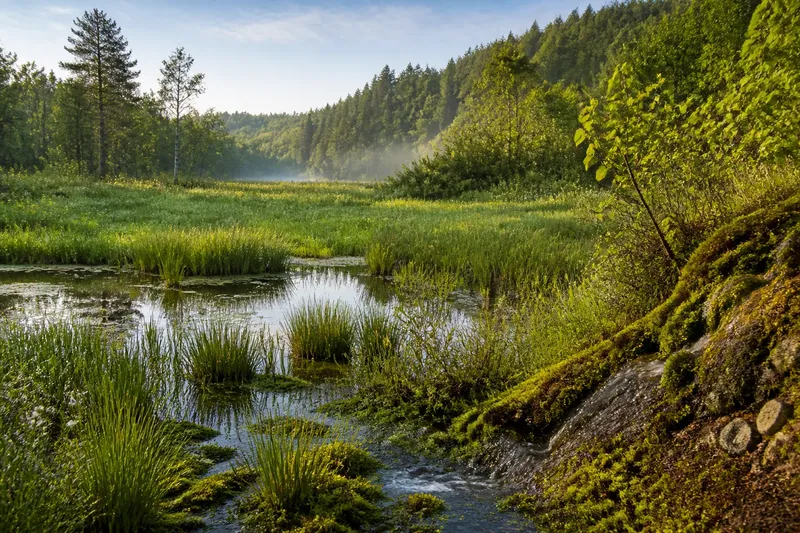
A marsh is generally a wetland dominated by soft-stemmed plants rather than trees. Reeds, rushes, sedges and grasses are common, though the mix depends on local conditions. Open pools may sit among the plants, or vegetation may cover most of the wet ground.
Marsh water can come from rain, rivers, lakes, tides or groundwater. Many marshes beside rivers and lakes experience changing water levels, while coastal marshes may be influenced by tides. The label does not identify the water source by itself.
Look for a low, open area with abundant herbaceous growth. A stand of reeds is only one clue: reeds can grow in different wetland types. Check whether woody plants dominate the wider area and note any visible inflows or seepage.
Fen water and peat
A fen is a peat-forming wetland supplied at least partly by groundwater or water moving through surrounding soil. That flow can carry dissolved minerals into the wetland. Fens are often less acidic than nearby rain-fed bogs, but appearance alone cannot establish water chemistry.
Sedges are strongly associated with fens, alongside mosses, grasses and small flowering plants. Some fens remain open; others have shrubs or scattered trees. The useful distinction is the combination of peat and groundwater influence, not a fixed plant list.
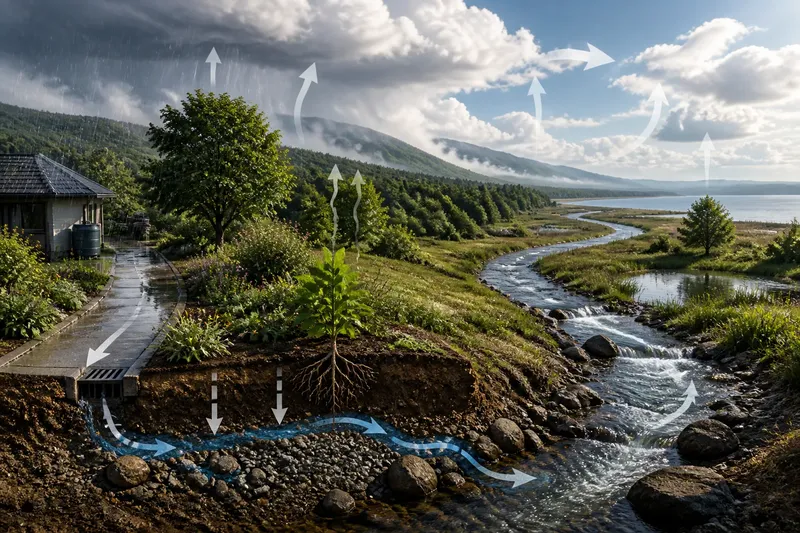
Water may seep from a slope, rise through the ground or travel slowly across peat. A fen can receive rain too, but it is not fed only by rainfall. These water pathways help shape the habitat and the plants that can grow there.
Swamp woody cover
A swamp is generally a wetland where trees or shrubs are prominent. It may have standing water, waterlogged soil or seasonal flooding. Swamps can occur beside rivers and lakes, on floodplains, or wherever wet conditions support woody plants.
In some regions, “swamp” commonly describes wooded wetlands with trees such as cypress or tupelo. Elsewhere, people use it more broadly for wet, shrubby or forested ground. The word does not specify one universal water depth or chemistry.
To distinguish a swamp from a marsh, ask which kind of vegetation dominates the area you are describing. Woody cover points towards swamp; reeds, sedges or grasses point towards marsh. Their edges can blend, so avoid treating a transition zone as a sharp boundary.
Comparing wetland clues
The terms draw attention to different features rather than forming three perfectly separate boxes. Marsh refers most directly to herbaceous vegetation; swamp points to woody cover; fen highlights peat and groundwater influence. A fen, for instance, can also have shrubs.
- Marsh: If soft-stemmed plants dominate, describe the area as marsh-like; if trees or shrubs dominate instead, describe the woody cover rather than relying on the marsh label.
- Fen: If peat-like ground and signs of seepage occur together, consider a fen-like description; if the water source is unclear, record the peat and vegetation without asserting groundwater influence.
- Swamp: If trees or shrubs form the main cover on wet ground, use swamp as a broad description; if herbaceous plants dominate, use marsh-like instead.
- Mixed edge: If woody cover and sedge or reed patches occur side by side, describe each patch separately; if the boundary is unclear, use a mixed wetland description.
- Seasonal water: If shallow water or saturated soil is visible, note that condition; if the ground is dry during your visit, avoid concluding that the site is never wet.
- Map label: If a map defines its wetland classes, use those definitions when reporting its categories; if it does not, describe the visible clues rather than treating its label as a field diagnosis.
These descriptions overlap. A fen can have shrubs, and a swamp can contain open patches of marsh plants. A site may also change over a short distance as higher ground gives way to a wetter hollow. Describe the dominant conditions in each area instead of forcing every patch into one label.
Reading a wetland site
Start with vegetation, then note the setting. Are trees or shrubs widespread, or do grasses and sedges dominate? Is the wetland beside a river, lake or coast, or does water seem to seep from higher ground? Does the soil look peat-like? These observations help form a careful description, but they do not establish water chemistry or formal classification.
Say you visit an invented wetland at the foot of a wooded slope. You record sedges in the open centre, shrubs around the edge, soft peat-like ground and visible seepage from uphill. First, you separate the open centre from the woody margin. Next, you note that peat-like ground and seepage make the centre fen-like, while the shrubs mark a different cover type at the edge. Your resulting description is “sedge-dominated, seep-fed wetland with a shrub margin”; the trade-off is that it avoids a single label for the whole site, while leaving formal classification unresolved.
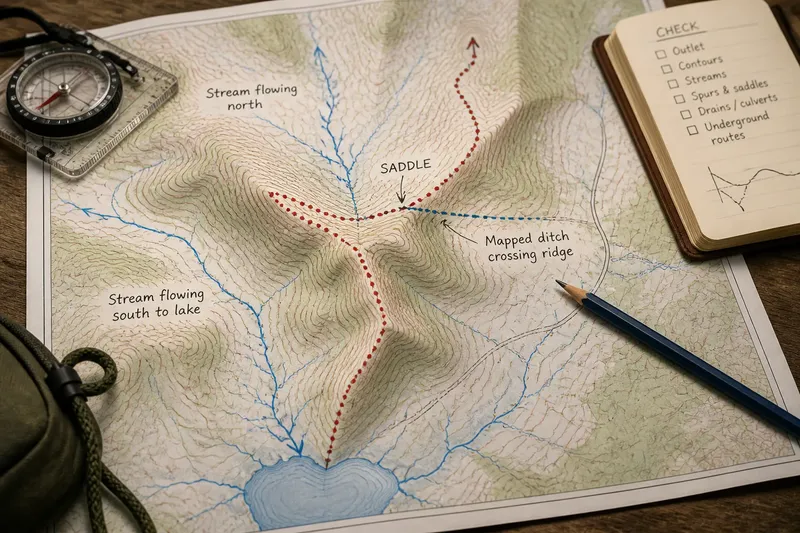
For a map, inspect the legend and definitions before interpreting a wetland name. A land-cover map and a habitat inventory may group the same place differently because they are designed to describe different features. Use the map’s own class names when discussing its categories, and describe observable vegetation or water clues separately when precision matters.
Questions about wetland types?
Can a fen contain trees?
Yes. Some fens have shrubs or scattered trees, particularly where conditions change across the wetland. Peat and groundwater influence are more informative clues than an assumption that every fen must be treeless.
Is a marsh always covered in water?
No. A marsh may have saturated soil, shallow water, seasonal flooding or open pools among vegetation. Record what is present during your visit rather than assuming the water level stays constant.
Are swamp and marsh interchangeable?
They overlap in everyday speech, but the broad distinction is vegetation: marshes tend to be dominated by soft-stemmed plants, while swamps tend to have shrubs or trees. If you are describing a particular place, name the cover you can see as well as the label.
Can plants alone identify a wetland?
Plants provide useful clues, but many species occur across more than one wetland type. Consider the water source, soil and surrounding land too, and avoid treating one plant as a definitive sign.
For a quick field note, write the visible clues first: “open sedge wetland with signs of seepage” is more useful than an unsupported label. The phrase marsh, fen or swamp is most helpful when it points to the observed connection between water, ground and vegetation, while leaving mixed edges visible in your description.